
Houston Parking Striping
HoustonParkingStriping.com

Warehouse Floor Striping in Houston, TX

Compare quotes from Houston-area professionals for warehouse floor striping.

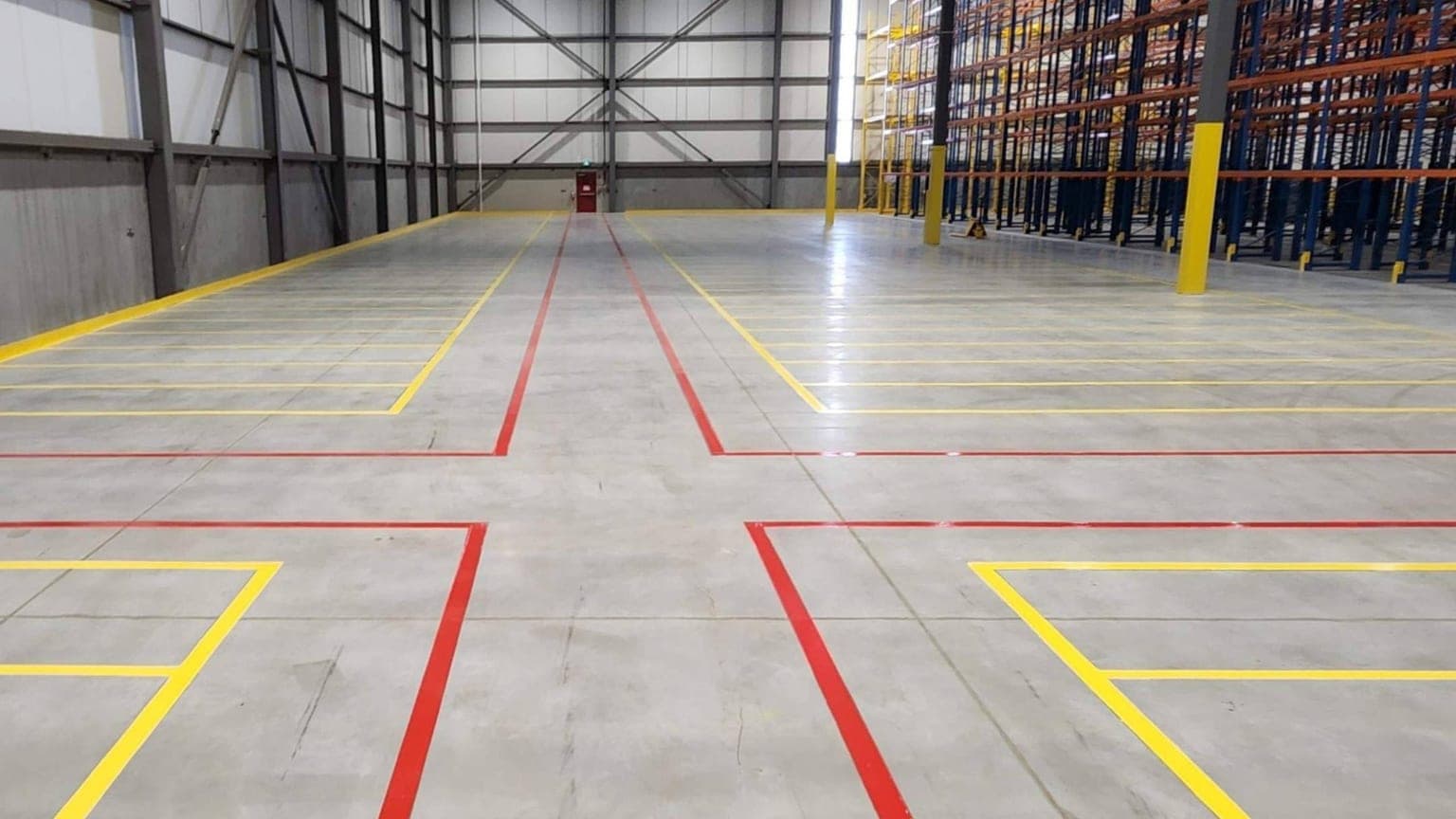
Warehouse floor with red and yellow industrial striping and aisle markings

Get Parking Lot Striping Quotes

By submitting, you agree that your information may be shared with a local parking lot striping professional who may contact you about your project. See our Privacy Policy.

What Gets Marked

  • Travel aisles for forklifts and material handling equipment.
  • Pedestrian walkways, separated from equipment traffic and carried through to doors and exits.
  • Keep-clear zones at fire extinguishers, hose stations, sprinkler risers, eyewash stations, electrical panels and exit doors.
  • Staging and storage footprints — inbound, outbound, work in process, quarantine, returns.
  • Dock and door approaches, including trailer staging and restraint areas.
  • Rack and equipment outlines, battery charging areas, and stop or yield markings at blind intersections.

Coatings and Surface Preparation

The bond between the marking and the floor is what determines how long the work lasts. Concrete that has been sealed, densified or previously coated will reject paint unless the surface is opened up first, and the fastest way to waste a marking budget is to skip that step.

  • Preparation — cleaning and degreasing at minimum; grinding, shot blasting or diamond abrading where an existing sealer or coating has to be removed.
  • Paints and coatings — acrylic and epoxy systems are common, with epoxy generally holding up better under sustained forklift traffic and chemical exposure.
  • Floor marking tape — faster to install, no cure time, and easy to change when the layout is still evolving, but less durable under heavy traffic and turning wheels.
  • Moisture — slabs on grade can drive vapour up through the floor and lift a coating. Older Houston-area buildings without an effective vapour barrier are worth testing before committing to an epoxy system.

Houston Industrial Corridors

Warehouse and distribution space in the Houston metro clusters in a few areas, and floor marking requests tend to follow them:

  • Northwest Houston along US 290 and Beltway 8.
  • The I-10 corridor west through Katy and the Energy Corridor.
  • The Port of Houston and the east side — Pasadena, Deer Park, Baytown and La Porte.
  • North Houston around Bush Intercontinental, Humble and Spring.
  • South and southwest toward Stafford, Missouri City and Pearland.

Many of these facilities run close to continuously, so the practical question is rarely whether the floor can be marked but when the building can give up a zone long enough for the coating to cure.

A note on how to use this page

The color and marking conventions described here are general industry practice summarised for planning purposes, not a compliance standard. Your obligations depend on the applicable OSHA standards, your local fire and building codes, and any customer or certification requirements your facility operates under. Confirm the specification with your safety lead or the authority having jurisdiction before work begins.

Warehouse Floor Striping Questions

How is warehouse floor striping different from parking lot striping?

The substrate is the main difference. Interior floors are usually sealed or coated concrete rather than asphalt, so paint that bonds well outdoors may not bond indoors without proper preparation. Interior work also means forklift traffic instead of car traffic, color conventions rather than stall layouts, and no weather delays but tighter operational windows.

What do the colors mean?

There is no single federal table assigning a meaning to every color. OSHA specifies red for fire protection equipment and containers of flammable materials, and yellow for caution and marking physical hazards. Beyond that, most facilities follow common industry convention — yellow for aisles and traffic paths, red or red-and-white hatching for keep-clear areas at fire equipment and electrical panels, and other colors for staging, work in process or finished goods. What matters most is that the scheme is consistent across the building and documented for staff.

How wide should aisle markings be?

OSHA requires that permanent aisles and passageways be appropriately marked but does not fix a single width in the general industry standard. Lines of 2 to 4 inches are common, with wider lines used where forklift traffic is heavy. Aisle width itself should suit the equipment operating in it.

Can the work be done without shutting the building down?

Usually. Most facilities are marked zone by zone, often over a weekend or on off-shift hours, so operations continue in the rest of the building. Coatings need cure time before traffic returns, and that window is the main scheduling constraint.

Related Pages

Ready to compare warehouse floor striping quotes?

Tell us about your property and we'll help you shop local parking lot striping professionals.

Request a Quote